Benefits of Burdock
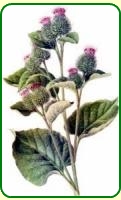
The benefits of burdock extend to many different body systems including digestive, circulatory, respiratory, reproductive, glandular and immune systems. No wonder it can help with stress relief.
Burdock is considered very nourishing.
Its roots can draw nourishment from deep within the soil.
It is rich in natural vitamins, minerals, trace minerals, amino acids, sugars and starches. This list of its minerals is quite extensive including chromium, iron, magnesium, silicon, cobalt, phosphorous, potassium, aluminum, calcium, manganese, selenium and zinc. Burdock also contains thiamine, vitamin C, vitamin A, protein, inulin, phenolic acids, mucilage, pectin and fiber.
Burdock is considered an “alterative.”
Burdock gradually restores proper functioning and increases health and vitality.
This property can make burdock useful for building resistance to
the stress of everyday life.
It is said to help increase stamina, resiliency and the joy of life.
It is even said to help promote emotional stability.
More Benefits of Burdock
Improved Digestion - Burdock is known to help strengthen the stomach, digestion and appetite. It helps to relieve gas. The mucilaginous fiber can soothe the gut and help absorb and eliminate toxins, chemicals and metal contaminants from the large intestine. Burdock seems to support healthy intestinal bacteria and is sometimes used by folks with Candida or yeast overgrowth.
First Aide for the Skin - Burdock has been used to help heal eruptions and diseases of the skin including acne, chronic rashes, dry scaly skin patches, eczema, and psoriasis.
It is said to help reduce blood sugar and benefit both the pancreas and liver.
Burdock is said to nourish and strengthen the actions of the kidneys and urinary organs.
Burdock is said to have a cooling action and can help reduce fever, and also some headaches.
It can help reduce swelling and pain, especially in joints.
It is reported to help strengthen the lungs and assist in breathing.
That's quite a lot of benefit from one common "weed."
Using Burdock
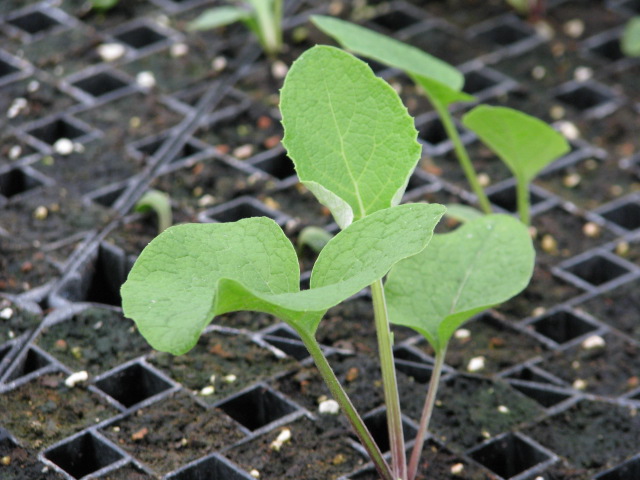 Burdock Seedling
The benefits of burdock can be gained in several different ways.
Burdock is used in Japanese and Macrobiotic cooking as a deeply nourishing root vegetable – high in nutrients yet low in calories. The cleaned burdock root is often sliced very fine, then sauteed, steamed and served with brown rice, soy sauce, sesame seed and other traditional eastern flavorings.
I often purchase the dried root powder from the bulk herb section of the health food store. Then I add a spoonful of dried powdered burdock root, at the end of cooking, to soup stocks and vegetable stews for a slightly sweet nutritional boost.
Burdock is also used as a tea. (Place about one teaspoon of burdock root in a cup of water, simmer for 10 to 15 minutes, cool and drink.)
The benefits of Burdock root are often
enhanced by using it
with Dandelion Root. (In fact Dandelion
and burdock is a popular soft drink in the United Kingdom.)
Burdock can be used medicinally as a fresh root tincture. It can be used externally as a poultice on sores and wounds.
Burdock Safety
Burdock is generally considered safe. It has been used by herbalists and their clients for many years. Records indicate that burdock was used in China, by the Native American Indians, as well as European settlers.
Although burdock is a natural plant, it is possible to be allergic to it. Please remember, this page is not intended to be medical advice. It is always wise to consult with a trained health care professional for appropriate recommendations for your situation.
Read about more plants that can give herbal stress relief or,
Return to Gentle Stress Relief home page .
Sources:
Weed, Susun S., 1989. Wise Woman Herbal Healing Wise. Woodstock New York: Ash Tree Publishing
Hoffmann, David. 1987, 1988, 1998. The Herbal Handbook A User’s Guide to Medical Herbalism. Rochester Vermont: Healing Arts Press
Hoffmann, David. 2003. Medical Herbalism The Science and Practice of Herbal Medicine. Rochester Vermont: Healing Arts Press
Wikipedia. 2009. “Burdock.” http://en.wikipedia.org/wiki/Burdock